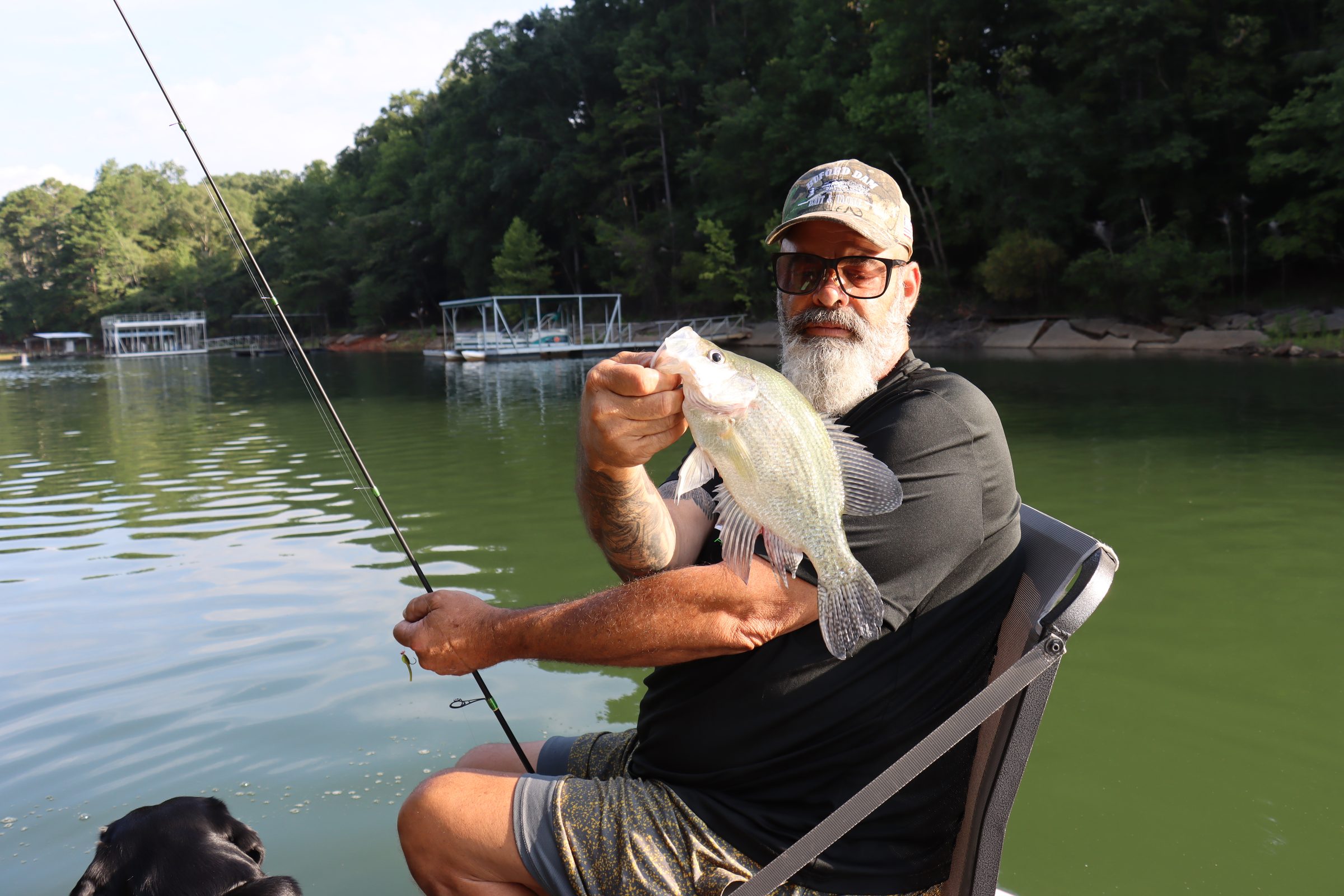
Lake Lanier is better known for stripers and spotted bass, but its crappie fishing is excellent and often overlooked. Here's how the bite works through the year and how to get in on it.
Lake Lanier covers about 38,000 acres north of Atlanta, with long creek arms, deep clear water and thousands of docks, plus brush piles and fish attractors placed by anglers and wildlife agencies. Crappie relate to that cover all year, so they can be caught in every season once you know where to look.
This is peak season. As the water warms, crappie move from deeper water toward the backs of coves and shallower cover to spawn, and the bite can be fast and shallow.
When the surface heats up, crappie slide deeper and hold on brush and timber, often around 15 to 25 feet, or suspend in the shade under docks. Early mornings and overcast days are the best windows.
As the water cools, crappie follow the baitfish and start to group up again around brush, timber and creek channels, and the bite picks back up.
Crappie school tightly on deeper brush and timber. They can be finicky, but good electronics and slow presentations still put fish in the boat.
Creek arms all around the lake hold crappie. John's favorite areas include Flat Creek and Six Mile Creek, which come alive in the low-light hours of early morning and on overcast days. Electronics make a big difference on Lanier, because much of the best brush sits in water you can't see into.
Anglers 16 and older need a Georgia fishing license. Check Georgia DNR's current fishing regulations for creel limits before you go.
A guided trip puts you on fish without years of trial and error. Captain John targets black crappie year-round and brings the rods, reels, tackle and fresh live bait. Choose a 4-hour half day, an 8-hour full day or a 2-hour fish finder lesson on your own unit.
Pick an open date and time on John's calendar. Rods, reels, tackle and fresh live bait are included, and veterans and first responders get a discount.
Book Your Trip Call (470) 802-3846